Audio Technology | How To's | Tips RSS


With so many KEF Architectural speaker models available, it can be challenging to navigate the options. Whether you’re building a home theater, setting up a sleek stereo system, or creating a multi-room music experience, this guide will help you understand KEF’s naming conventions and make the right choices.
Read more


To get an idea how a port in a loudspeaker cabinet works think of blowing air across the top of a bottle. At some point, the air pressure and bottle volume combine to make a noise. That’s the Helmholtz Resonance. As the volume changes with increased or decreased liquid in the bottle the “note” you hear changes in frequency.
Read more

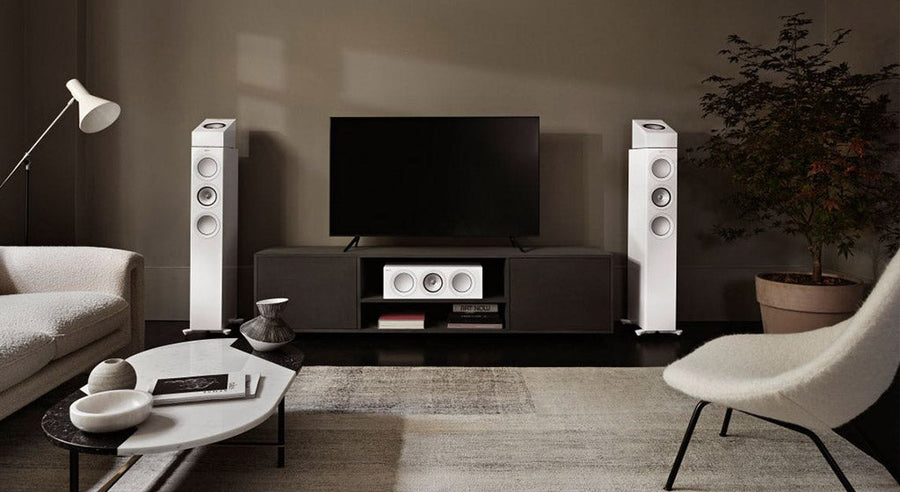
The Oxford Dictionary of the English Language defines ‘high fidelity’ as the reproduction of sound with little distortion, giving a result very similar to the original.IIn this case ‘distortion’ doesn’t mean noise, it means any change to the original This reprint of a 2019 KEF Blog article examines excatly what High-Fidelity is.
Read more


Despite the fact most of us would much rather just stay home, humans are social creatures – always have been and always will be. That’s why every culture has fairs and festivals and centuries-long traditions that are all celebrated with music at the center of each. The world changes but many of these traditions are passed down from generation to generation, keeping our ties to our past resilient. Our connection to music is part of what makes us human.
Read more


Our relationship with music is a hard-wired thing. The more we indulge our link to music the more it fires up our brains. When you sit and listen to music – not in the background but as an active participant, no less than eleven sections of your brain become active, and not just active, but excited. With music, areas that help you communicate better, analyze situations better, remember things, and maintain muscle memory are all simultaneously excited.
Read more